
IASSW is pleased to announce the publication of the third volume in the Advancing Social Work series it is creating in collaboration with Springer Nature. The volumes are part of the Springer ‘Briefs’ series, which are intended to be short introductions to new topics, or topics with which readers may be unfamiliar. Each chapter is less than 6000 words, y algunos contenidos están disponibles en español. Immediate Past President of IASSW Annamaria Campanini has contributed a foreword to each book.
The concept of ‘pushing boundaries’ comes from an understanding that social work around the world is situated in an awkward space. Social workers value empowerment and liberation at the same time we are mandated by civil authorities to implement social control over the lives of our clients. Chapters in these volumes address the ways social work pushes against the boundaries imposed on clients—and social workers—by these authorities and holds them to account.
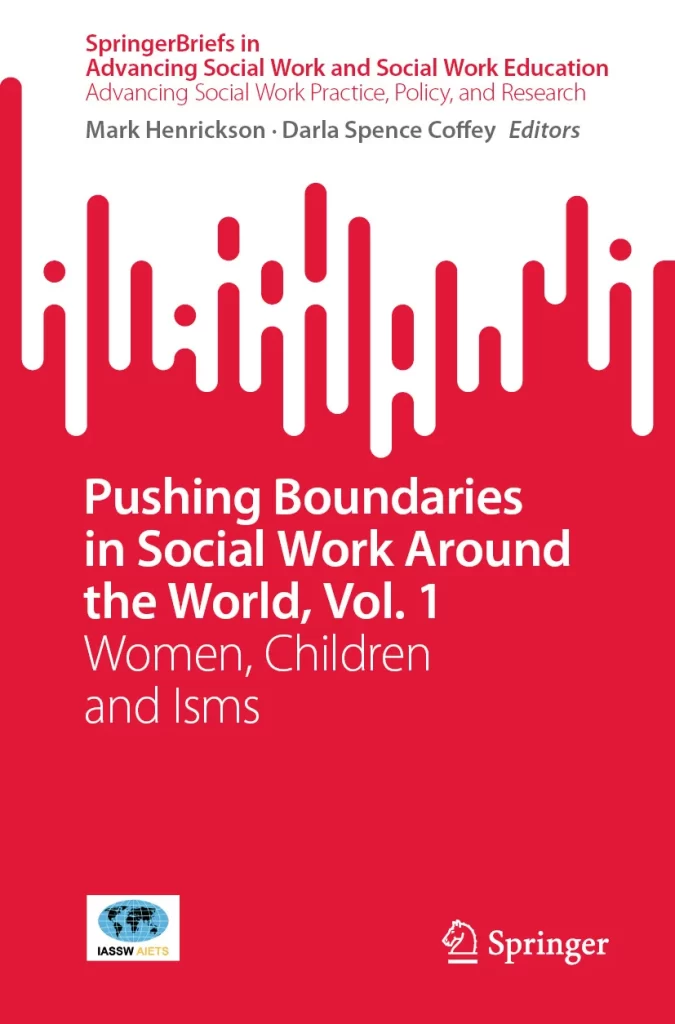
Pushing Boundaries in Social Work Around the World has been published in two books of eight chapters each. Volume 1 is subtitled Women, Children and Isms, and includes contributions from authors in India, Kenya, Namibia, Zimbabwe, California USA, Mexico, Spain and Australia. Topics range from managing juvenile offenders, to responding creatively to global anti-Blackness, to retaining trans persons in employment, to Mad studies. The book can be accessed at https://link.springer.com/book/10.1007/978-3-031-91588-8
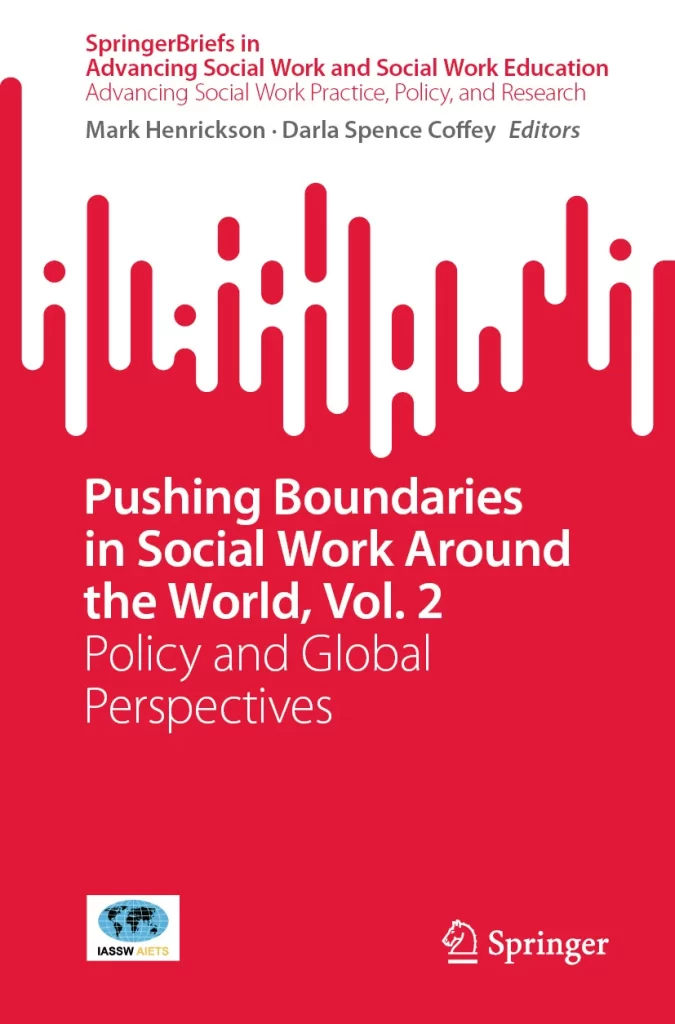
Volume 2 is subtitled Policy and Global Perspectives and includes contributions from authors in Finland, Chile, British Columbia Canada, South Africa, Brazil, Germany, Alberta Canada, and Aotearoa New Zealand. Topics in this volume range from working with undocumented migrants, to community resistance, to reconsidering human being in the context of wider ecologies and relationships, to the future of social work itself. The book can be accessed at https://link.springer.com/book/10.1007/978-3-031-91421-8.
The books were edited by Mark Henrickson and Darla Spence Coffey, and are available in both hard copy and e-book versions. We encourage you to recommend these books to your institutional libraries.